Parboiling and Dryer
Integrated Parboiling & Drying Systems for Higher Yield, Uniform Grain Quality
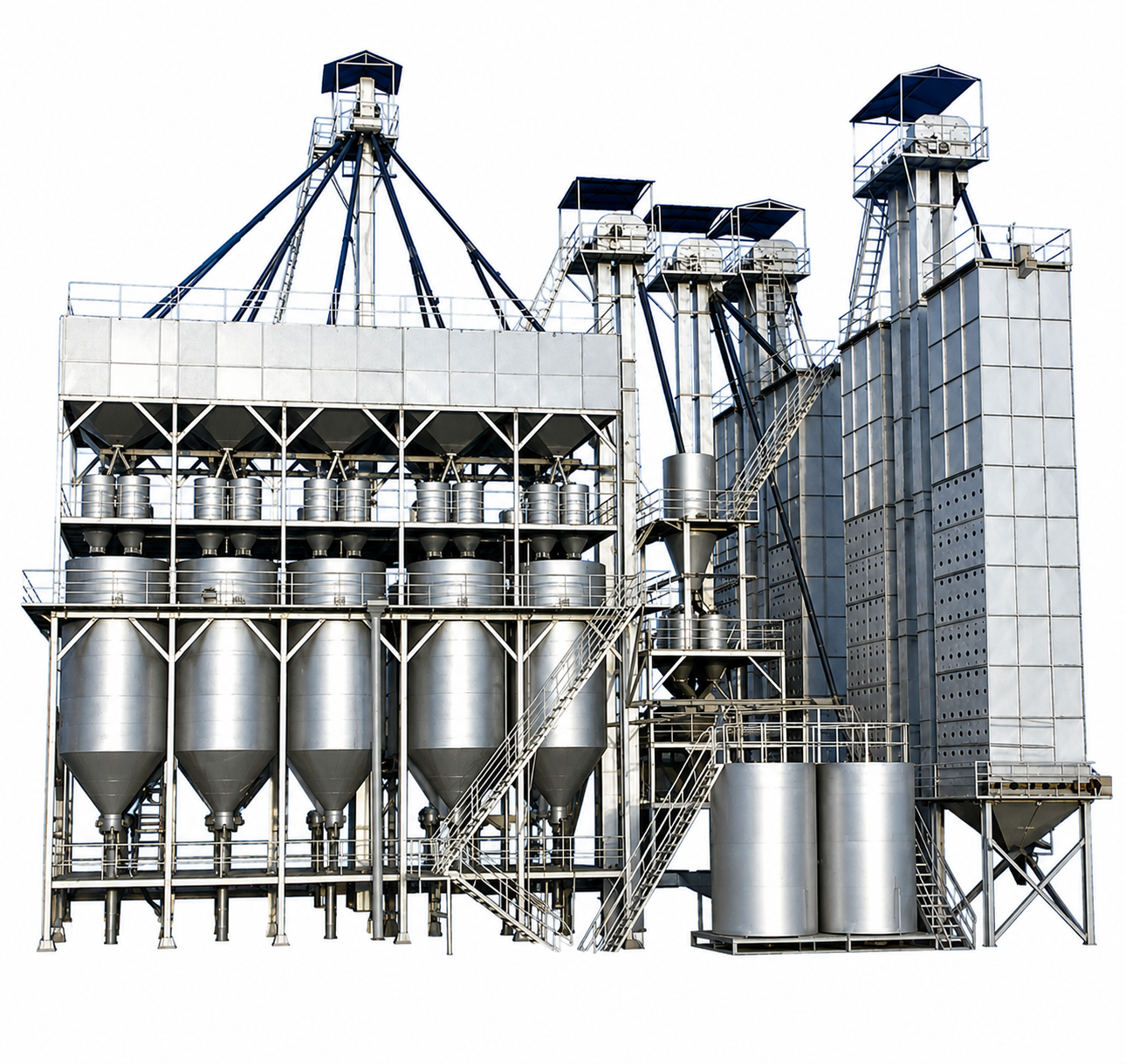
Parboiling and Dryer Plant for Consistent, High-Yield Rice Processing
A parboiling and dryer plant combines two connected hydrothermal processing stages into one system: paddy is soaked and steamed in the parboiling section to gelatinize the starch and strengthen the kernel, then moved into the drying section where controlled, weather-independent airflow brings moisture down to safe milling levels.
Agromach builds these as an integrated line — stainless steel wetted parts in the soaking/steaming section, and batch, continuous-flow, or fluidized-bed drying downstream — so millers get one coordinated process instead of managing parboiling and drying as separate, uncoordinated steps.
- Combines soaking, steaming, and drying into one integrated process line
- Cuts grain breakage and boosts milling yield vs. raw processing or sun-drying
- Weather-independent drying keeps the line running day or night, any season
- Available in single, double, or multi-stage steaming with matched drying capacity
The Cost of Poor Parboiling or Inconsistent Drying
When soaking, steaming, or the drying stage that follows is uneven, the paddy reaching the mill is already compromised:
- High grain breakage during hulling and polishing
- Uneven kernel color instead of a consistent translucent finish
- Under-gelatinized starch leaving grains soft or prone to cracking
- Uneven or excess moisture from uncontrolled/sun drying, causing over-drying or under-drying
- Weather-dependent drying that stalls the line at night, in rain, or during monsoon
- Rejected or downgraded lots that fail buyer/export quality standards
Inconsistent parboiling or drying doesn't just lower output — it turns a batch of good paddy into low-grade rice.
Agromach's Parboiling and Dryer Plant Solution
A properly engineered parboiling and dryer plant standardizes soaking temperature, steaming pressure, and drying airflow/temperature so every batch of paddy is treated the same way from soak tank to milling-ready moisture.
Consistent hydrothermal treatment plus controlled drying is what separates a premium parboiled rice mill from one still losing yield to breakage.
- Reduces milling losses and grain breakage through controlled gelatinization and drying
- Produces uniform kernel color, hardness, and shape batch to batch
- Improves head rice recovery and overall milling yield
- Removes dependence on sunlight and weather for drying
- Retains more vitamin B and minerals in the kernel
- Meets consumer and export quality standards
A well-run parboiling and drying line pays for itself in recovered yield, fewer rejected lots, and year-round operation.
Agromach Parboiling and Dryer Plant — Precise & Scalable
Built to give millers precise, repeatable control over every stage from soaking through to final drying.
Key Features
- Temperature-controlled soaking tanks for uniform water absorption
- Controlled-pressure steaming for consistent gelatinization
- Multi-stage drying (rapid drying + tempering) matched to plant capacity
- Stainless steel wetted components resistant to corrosion and heat
- Weather-independent drying — runs day or night, any season
- Factory-assembled, bolted modular construction
Scales With Your Mill
Agromach parboiling and dryer plants are designed to:
- Serve small batch units up to continuous high-capacity systems
- Expand horizontally or vertically for future capacity increases
- Integrate with husk-fired boilers already on site
- Combine with silos and downstream milling lines
This gives mills a path to expand without re-engineering the whole line.
Types Available
- Parboiling and Dryer Plant (standard integrated hydrothermal + drying system)
- Batch Parboiling System with Batch Dryer
- Continuous Parboiling Plant with Continuous-Flow Dryer
- Single-Stage / Double-Stage Steaming with Fluidized Bed Dryer
Applications
- Commercial and industrial parboiled (boiled) rice mills
- Rice mills targeting export-grade quality standards
- Mills processing paddy varieties prone to breakage under raw milling
- Mills needing weather-independent drying through monsoon or humid seasons
Parboiling and Dryer Plant Price
The parboiling and dryer plant price depends on:
- Plant capacity (tons per batch or tons per day)
- Number of steaming stages (single, double, three-stage)
- Dryer type/configuration (batch, continuous-flow, fluidized bed)
- Automation level (standard vs. fully automatic)
- Boiler type and fuel source for both steaming and drying
Contact our team for the latest parboiling and dryer plant price and a configuration matched to your capacity.
Frequently Asked Questions
Need a Reliable Parboiling and Dryer Plant for Your Rice Mill?
Talk to our experts for a soaking, steaming, and drying configuration matched to your capacity and grade.
Agromach Engineering builds parboiling and dryer plants, batch and continuous parboiling systems, and boiled rice mill plants engineered for consistent quality and higher milling yield.