Husk Aspirator Machine (Close Loop)
Dust-Contained, Pollution-Compliant Husk Separation for Modern Rice Mills
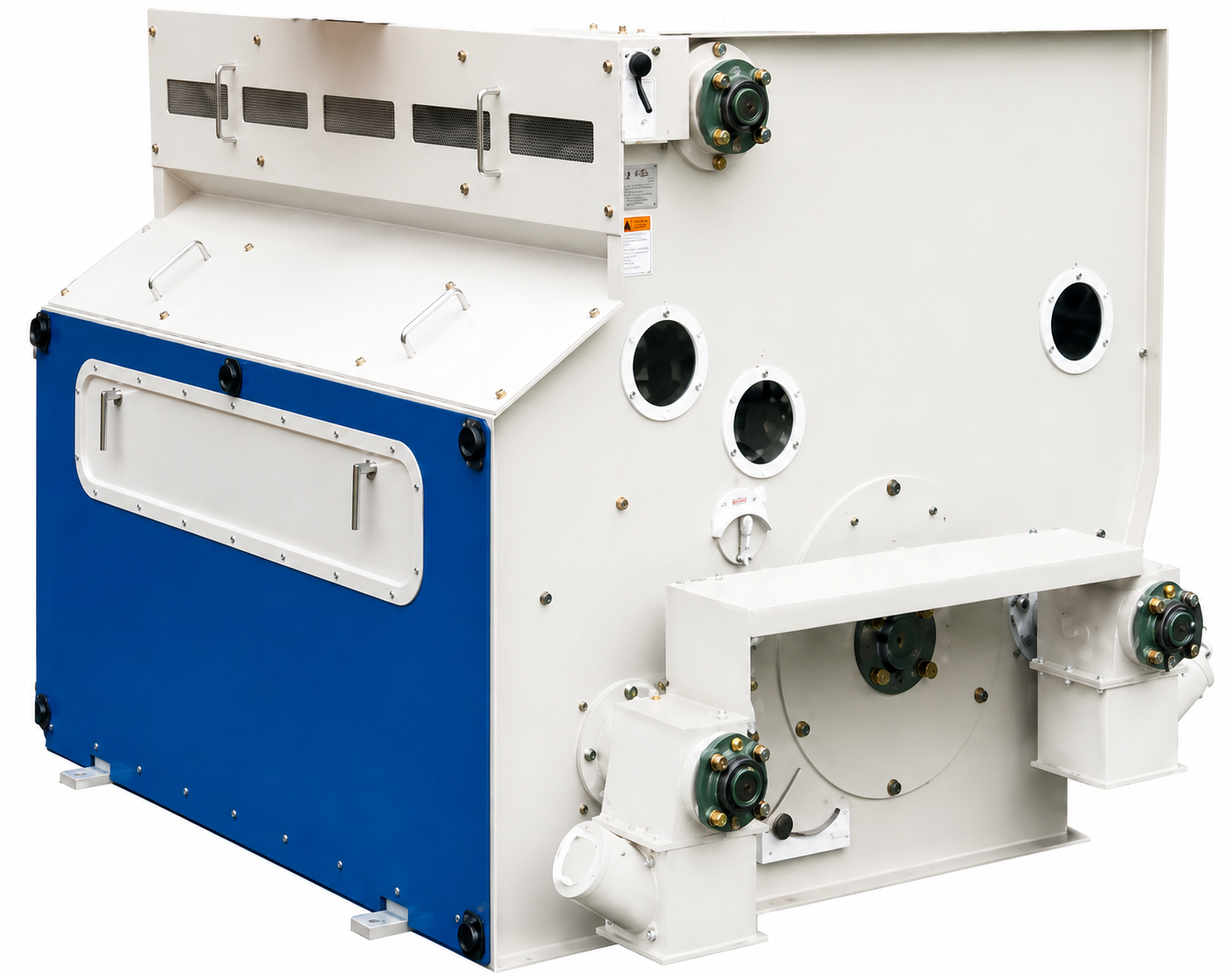
Close Loop Husk Aspirator for Contained, Compliant Husk Removal
A husk aspirator is installed right after the rubber roll sheller to separate husk from the paddy–brown rice mix using controlled airflow. Agromach's Close Loop Husk Aspirator routes this aspiration air through a sealed ducting circuit into a cyclone dust collector, instead of discharging husk-laden air into the open mill yard.
Built on the same proven separation principle as our standard husk aspirator, the close loop version adds contained, cyclone-based dust handling suited to today's stricter shop-floor and pollution-control requirements.
- Closed-circuit ducting instead of open discharge
- Cyclone-based dust capture reduces airborne husk
- Supports pollution control board compliance
- Same proven separation accuracy as standard model
Why Uncontrolled Husk Dust Damages Your Entire Rice Mill Plant
When husk dust from an open aspirator spreads freely instead of being captured in a closed circuit, it creates problems well beyond the sheller station:
- Worker exposure to airborne husk and grain dust over time
- Fine husk dust is combustible, raising fire and dust-explosion risk
- Dust drifting into panel rooms accelerates wear on switchgear and instrumentation
- Uncontrolled emissions make pollution control board compliance harder
- Constant dust settling increases housekeeping load and contaminates equipment
Left unmanaged, husk dust doesn't stay at the sheller — it settles into every corner of the plant, its people, and its compliance record.
Close Loop Design — Husk Separation and Dust Containment in One Circuit
Instead of venting husk-laden air into the open mill yard, Agromach's close loop system keeps the aspiration air moving through a sealed duct circuit into a cyclone dust collector, separating and containing husk before it can spread through the plant.
Husk separation and dust containment, handled in one closed circuit — not two separate problems.
- Closed ducting and cyclone separation keep husk dust out of the work environment
- Helps mills meet pollution control board norms for particulate emissions
- Reduces airborne combustible dust load near the sheller
- Protects nearby panel rooms and electrical equipment from dust ingress
- Delivers husk cleanly to the collection point via enclosed pneumatic conveying
A close loop husk aspirator turns husk handling from an open pollution source into a controlled, contained process.
Agromach Close Loop Husk Aspirator — Built for Containment & Reliability
Built for the same core job as a standard aspirator, with containment engineered in from the ducting up.
Key Features
- Dynamically balanced blower for stable, vibration-free operation
- Closed-loop ducting with integrated cyclone dust separator
- Adjustable flaps for precise husk-to-grain separation
- Stainless steel wear-resistant lining at husk-contact areas
- Enclosed pneumatic husk transport to the collection point
- Low-noise, low-maintenance design for continuous operation
Contained Dust Handling by Design
The close loop system is engineered to:
- Keep husk and dust inside a sealed circuit end-to-end
- Separate husk cleanly via cyclone before discharge
- Minimize open dust exposure on the mill floor
- Support ongoing pollution-control compliance
This makes it the preferred choice for mills upgrading from open aspiration systems.
Types Available
- Capacity-based models (low, medium, high TPH)
- Cast iron body or stainless steel body options
- Single-cyclone close loop configuration
- Multi-cyclone / bag-filter integrated configuration
- Standalone unit or centralized dust-collection integration
Applications
- Rice mills installing husk removal after the rubber roll sheller
- Raw, parboiled, and steam rice processing lines
- Mills required to meet pollution control emission norms
- Mills near residential or environmentally sensitive areas
Husk Aspirator (Close Loop) Price
The close loop husk aspirator price depends on:
- Milling capacity (TPH) the aspirator must handle
- Body construction — mild/cast iron vs. stainless steel
- Blower and motor power (HP) rating
- Cyclone/dust collector size and bag filter stage
- Ducting length and integration with central dust collection
Contact our team for the latest close loop husk aspirator price and a capacity-matched recommendation.
Frequently Asked Questions
Need a Close Loop Husk Aspirator for Your Rice Mill?
Talk to our experts for contained, pollution-compliant husk separation and complete project guidance.
Agromach manufactures Husk Aspirator (Close Loop) systems, closed loop husk aspiration units, and cyclone-integrated husk separators for modern, pollution-compliant rice milling plants.