Husk-Fired Steam Boiler
Reliable Husk-Fired Steam Boilers for Consistent Parboiling
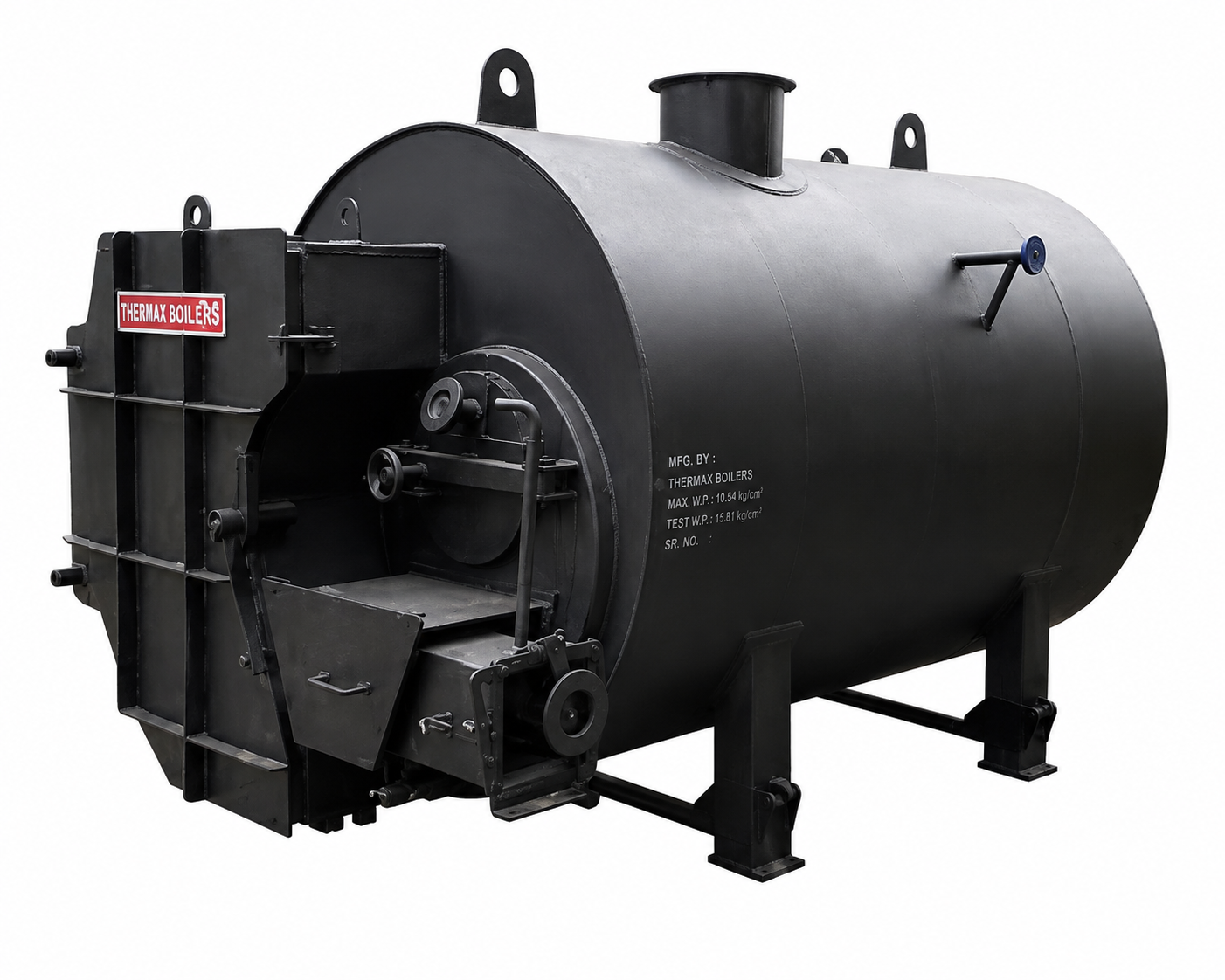
Husk-Fired Steam Boiler for Rice Mill Parboiling
A rice mill steam boiler generates the steam needed for parboiling — soaking paddy in water and then steaming it before drying and milling. This step improves the nutritional value of the rice and depends on a steady, adequately pressured steam supply through the soaking, steaming, and drying stages.
Agromach's rice mill steam boiler is built for continuous mill operation, running on rice husk — a fuel already available on-site as a milling byproduct — with the dust collection, tube protection, and automated fuel/ash handling that husk firing requires.
- Rice husk-fired design turns milling waste into boiler fuel
- Delivers steady steam for soaking, parboiling, and drying
- Dust collection and tube protection for abrasive husk ash
- Manual or automatic fuel-feed configurations available
Why Steam Supply Reliability Matters in Parboiling
An undersized, poorly maintained, or inefficient boiler creates problems that ripple through the entire milling line:
- Inconsistent parboiling quality — uneven soaking/steaming and more broken rice
- Process interruptions during soaking, parboiling, or drying
- Fuel wastage from incomplete combustion or a mismatched boiler
- Downtime from ash and abrasive dust erosion damaging tubes
- Higher labour dependency where fuel feeding is not automated
Unreliable steam generation doesn't just slow output — it shows up directly in rice quality and broken-rice percentage.
A Boiler Matched to Rice Mill Duty
Agromach's steam boiler is sized and configured around the mill's actual parboiling, drying, and milling loads, using rice husk as the primary fuel to keep running costs low since husk is largely a byproduct already on site.
Built for the process rice mills actually run — soaking, parboiling, drying — not adapted from a generic industrial boiler.
- Stable steam output supports consistent soak-and-steam quality
- Rice husk fuel keeps operating costs low
- Dust collection and tube protection reduce erosion-related downtime
- Automatic or manual fuel-feed and de-ashing options
- Compact, skid-mounted construction simplifies installation
Choose a configuration sized to your mill's steam demand, built to run on the fuel your mill already produces.
Agromach Husk-Fired Boiler — Efficient & Mill-Matched
Built around the demands of continuous husk-fired operation in a rice mill.
Key Features
- Rice husk (biomass) fired combustion system
- High thermal efficiency, improved further with an economiser
- Dust collection system for abrasive silica ash
- Protective tube fittings to resist husk-particle erosion
- Manual or automatic (pneumatic) fuel feeding
- Automatic de-ashing to reduce labour dependency
Sized to Your Process Load
Agromach configures boilers around:
- Required steam output (kg/hr to TPH)
- Operating pressure needed for the process
- Combustion design — packaged fire tube vs. fluidized bed
- IBR compliance requirements where applicable
This keeps steam supply matched to actual mill demand rather than oversized or undersized.
Types Available
- Husk Fired Steam Boiler (Packaged Fire Tube)
- Fluidized Bed Combustion (FBC) Boiler
- Rice Mill Steam Boiler
- Biomass Boiler (multi-fuel)
- IBR-Compliant Boiler (capacity/pressure dependent)
Applications
- Parboiling (soaking and steaming paddy)
- Paddy drying and moisture reduction
- Grain conditioning before milling
- Powering ancillary mill machinery
Husk-Fired Steam Boiler Price
The husk-fired steam boiler price depends on:
- Boiler capacity (steam output)
- Operating pressure requirements
- Combustion design (packaged fire tube vs. fluidized bed)
- Level of automation (fuel feeding, de-ashing, controls)
- Emission control and dust collection configuration
Contact our team for the latest boiler price and configuration for your mill's capacity.
Frequently Asked Questions
Need a Reliable Steam Boiler for Your Rice Mill?
Talk to our experts to size a husk-fired boiler configuration for your mill's capacity and process needs.
Agromach supplies husk-fired steam boilers, biomass boilers, and rice mill steam boilers built for dependable parboiling, drying, and grain-conditioning steam supply.